
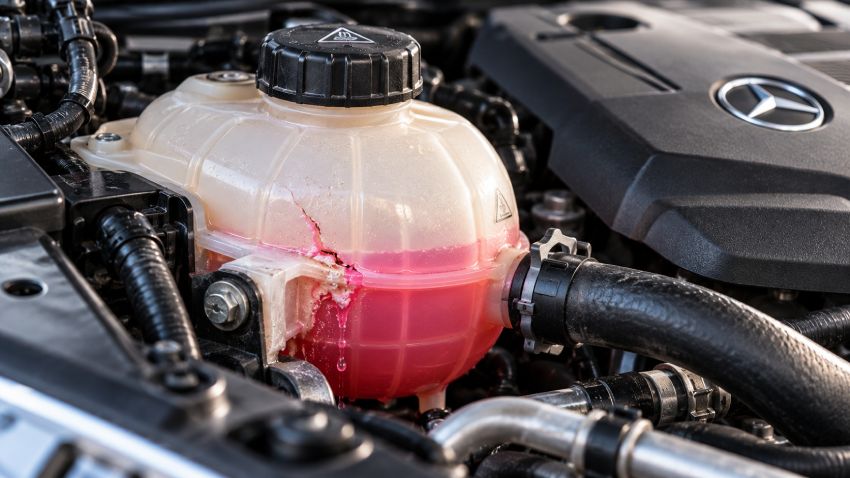
A cracked coolant reservoir is one of the more common Mercedes cooling system failures, and it’s also one of the easier ones to confuse with a bigger problem. Owners often spot coolant under the car and immediately worry about the water pump or head gasket, when a cheap plastic reservoir is the actual culprit.
Here’s what causes reservoir cracks on Mercedes and how to handle the repair.
Why Mercedes Coolant Reservoirs Crack
The reservoir sits in the engine bay exposed to continuous heat cycling. Over years, the plastic becomes brittle, loses flexibility, and eventually develops hairline cracks around high-stress areas:
- Mounting points
- Cap threads
- Low-level sensor fittings
- Hose connection fittings
- Internal baffles
Florida heat accelerates the process significantly. The repeated expansion and contraction stresses weaken plastic far faster than in milder climates, which is one of the main reasons local owners see a Mercedes coolant leak from the reservoir sooner than northern drivers.
Common Symptoms of a Cracked Reservoir
Watch for:
- A visible crack along the reservoir surface
- Coolant residue or crust around the reservoir
- A small puddle under the engine bay rather than directly beneath the engine
- Coolant level that drops without obvious leak points
- Occasional sweet smell near the front of the vehicle
The symptoms overlap with thermostat failure symptoms and water pump leaks, which is why visual confirmation matters before ordering parts.
Why DIY Fixes Rarely Hold
Owners sometimes try to seal reservoir cracks with epoxy or sealant. These fixes almost never hold because:
- The plastic flexes continuously with heat cycling
- Coolant pressure (around 15 to 20 PSI when hot) pushes against repairs
- Sealants aren’t designed for the chemicals in modern coolant
- The underlying brittleness continues to spread
Replacement is the only durable fix. Reviewing signs of water pump failure helps you understand why cooling system components rarely benefit from temporary repairs.
Replacement Cost Expectations
A typical Mercedes coolant reservoir replacement runs:
- Parts: $80 to $250 for the reservoir itself
- Cap and sensor: $30 to $80
- Coolant: $50 to $100
- Labor: 1 to 2 hours
- Total: $250 to $600 at a qualified specialist
This is one of the more affordable coolant leak repairs, which is why confirming the reservoir as the actual source matters before replacing more expensive components.
When to Bundle Related Service
If your reservoir is cracked, specialists often recommend:
- Inspecting the radiator for similar plastic degradation
- Checking hoses and clamps
- Replacing the reservoir cap (often sold separately)
- Flushing coolant if it hasn’t been done recently
- Checking the thermostat housing for early cracks
Understanding why your European car is losing coolant helps you spot related issues before they turn into separate shop visits.
Preventive Steps for Florida Owners
A few habits extend reservoir life:
- Park in shade when possible to reduce heat soak
- Check coolant level monthly during summer
- Address small cracks or stress marks immediately
- Flush coolant on schedule to prevent chemical breakdown
- Schedule annual cooling system inspections
Replace Your Mercedes Reservoir the Right Way
At Gulf Euro Clinic, we diagnose coolant leaks accurately and recommend the actual repair needed, not the most expensive one. As a trusted european car service specialist in Bradenton and near Sarasota, we handle reservoir replacement cleanly and bundle related items when it makes sense. We also offer euro car maintenance for domestic vehicles. Schedule your inspection today.