
Why Doesn’t My AC Recharge Last?
If you’ve recharged your car’s AC two or three times in a year, something is wrong. AC systems are sealed loops designed to not lose refrigerant. When they do, it’s escaping through a leak that needs to be found and fixed.
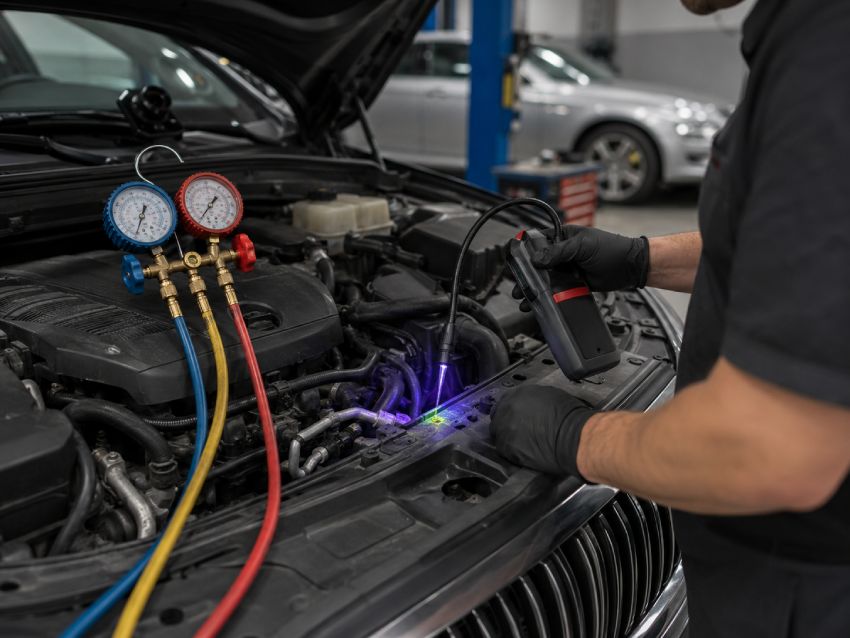
A recharge without diagnosis is a patch, not a repair. Proper AC Refrigerant Leak Detection is the only reliable way to break the recharge cycle.
What Actually Causes Repeated AC Recharges?
Common underlying causes include:
- Evaporator core leaks (most expensive to fix)
- Compressor seal failures
- Hose deterioration over time
- Schrader valve issues
- Condenser damage from road debris
- O-ring failures at component connections
Each one is a real leak point that requires proper detection to identify before any AC Repair can actually solve the problem.
Why Do Some Shops Just Recharge Without Diagnosing?
Quick recharges are faster than proper diagnosis, cost less upfront, and produce immediate cold air. The leak takes weeks to drain the system again, by which point the customer often returns to a different shop.
How Does AC Relate to Other Thermal Systems?
Your AC and cooling system share thermal challenges. If your vehicle is losing coolant, the same Florida heat stressing your cooling system is also accelerating AC wear. Both deserve attention together.
How Long Should a Proper AC Repair Last?
Realistic expectations:
- Properly diagnosed and repaired AC: years of normal operation
- Failed recharge with active leak: weeks to a few months
- Comprehensive system service: 10+ years before major work
What Does Florida Heat Add to the Equation?
Florida conditions stress AC systems harder than most regions:
- AC runs nearly year-round
- Sustained high ambient temperatures
- Coastal salt air corrodes components
- High humidity affects condensation
- Stop-and-go traffic increases system stress
Florida compresses failure timelines significantly.
What About Related Cooling System Warning Signs?
Many AC issues develop alongside cooling problems. Recognizing the warning signs of Cooling System Repairs helps you catch related thermal issues early before they cascade. The two systems often need attention at similar intervals.
What Should You Do If You’re Stuck in a Recharge Cycle?
Practical steps:
- Stop authorizing recharges without leak detection
- Request a complete leak detection workflow
- Ask specifically about UV dye testing
- Confirm nitrogen pressure testing will be performed
- Get a written diagnostic report
Why Does Detection Save Money Long-Term?
The honest math:
- Quick recharge: $150-$250 (lasts weeks)
- Three recharges in a year: $450-$750
- Complete leak detection + repair: $400-$1,500
- One proper repair lasts years
Combined with proper coolant system maintenance, thermal system care prevents the most expensive cascading failures.
Schedule a Proper AC Diagnosis
If you’re tired of recharges that don’t last, Gulf Euro Clinic offers expert auto ac repair in Bradenton with complete leak detection. Reach out to schedule.