
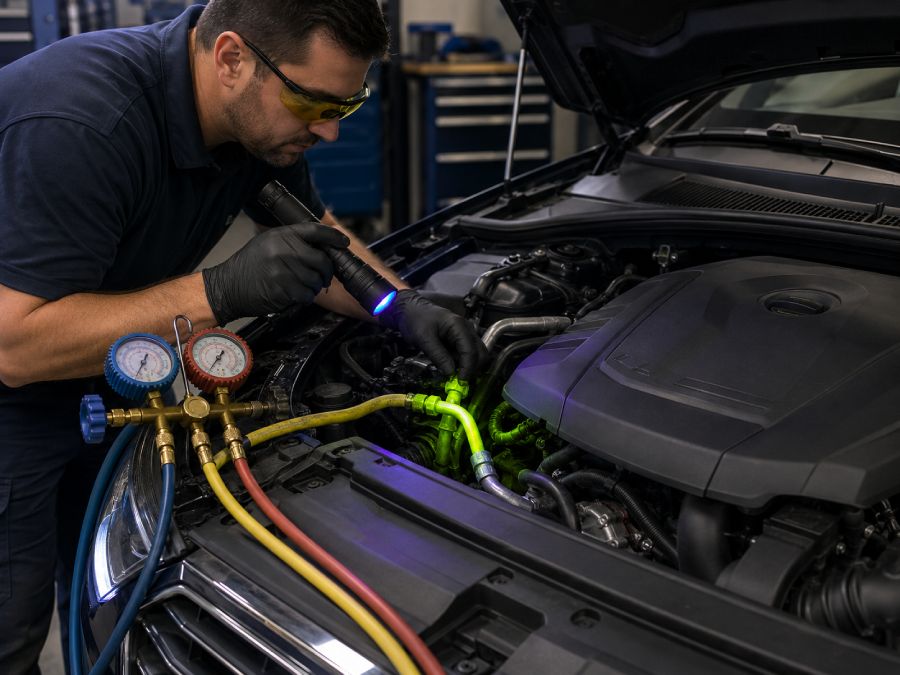
What Is UV Dye Testing in AC Diagnosis?
UV dye testing is one of the most reliable methods in modern AC leak diagnosis. Fluorescent dye gets added to the AC system along with refrigerant. As the system runs, any escaping refrigerant carries dye with it, leaving visible traces under UV light at the exact leak location.
How Does UV Dye Testing Actually Work?
The complete process involves:
- Adding fluorescent dye to the AC system
- Running the system normally for hours or days
- Allowing the dye to circulate through every component
- Returning to the shop for UV inspection
- Identifying glowing dye traces at leak points
Quality AC Refrigerant Leak Detection workflows always include UV dye as one of several complementary methods.
Why Does UV Dye Catch What Sniffers Miss?
Electronic sniffers and UV dye complement each other. Sniffers detect refrigerant in the air around leaks while UV dye reveals exact physical leak locations. Sniffers can struggle in tight engine bay spaces while UV dye shows hard-to-reach areas clearly.
Which Leaks Does UV Dye Find Best?
UV dye excels at finding:
- Evaporator core leaks behind the dashboard
- Rear AC line leaks
- Slow, intermittent leaks
- Compressor seal weeps
- Multiple small leaks across the system
This thoroughness distinguishes proper AC Repair from quick recharges that miss real problems.
How Do AC and Cooling Issues Often Overlap?
Florida vehicles frequently develop AC leaks alongside cooling problems. If your car is losing coolant at the same time AC refrigerant is dropping, the underlying cause often involves heat stress affecting both systems simultaneously.
Why Do Some Shops Skip UV Dye Testing?
UV dye requires a return visit after dye circulates, adds time to the diagnostic process, costs more than basic recharge service, and faces customer pressure for immediate results. The shops that skip it often miss the actual leak.
How Long Does UV Dye Testing Take?
Realistic timing:
- Initial appointment: 30-60 minutes
- Circulation period: 24 hours to several days
- Return inspection: 30-60 minutes
- Active shop time: 1-2 hours total
The vehicle drives normally during circulation.
How Does Cooling System Health Affect AC Diagnosis?
When diagnosing AC issues, technicians also evaluate overall thermal health. Recognizing the warning signs of Cooling System Repairs often reveals related issues that affect AC performance.
What Should You Expect After UV Dye Testing?
Quality detection provides documentation of dye locations, photos of UV-visible leak points, specific component identification, and repair cost estimates by component. This documentation prevents costly misdiagnosis.
When Is UV Dye Most Useful?
UV dye testing is especially valuable when system loses refrigerant slowly, previous repairs haven’t resolved the issue, multiple leaks may be present, or the vehicle has complex European AC routing.
What Does Complete Detection Cost?
Realistic pricing:
- Quick recharge only: $100-$200
- Basic sniffer test + recharge: $200-$350
- Complete leak detection with UV dye: $150-$300
- Comprehensive diagnosis + repair: $400-$1,500+
Combined with regular coolant system maintenance, comprehensive thermal care prevents cascading failures.
Schedule UV Dye Testing
For comprehensive AC leak detection including UV dye, Gulf Euro Clinic offers expert auto ac repair in Bradenton. Reach out to schedule.