
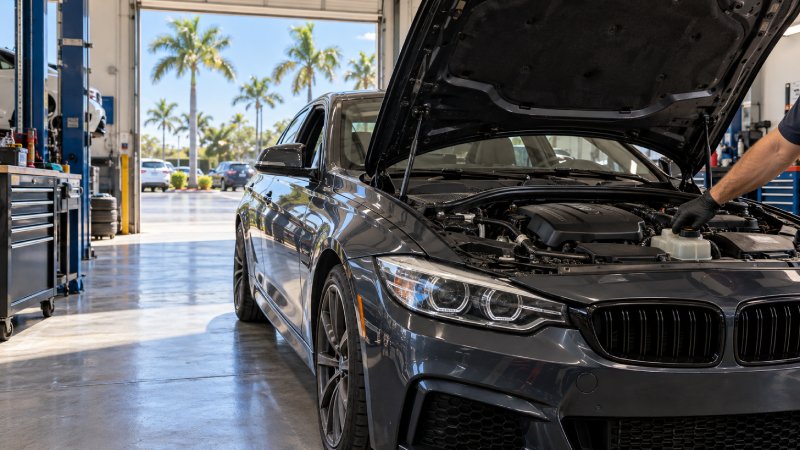
“My tuned BMW feels incredible in January, but by July it feels like half the power went missing, especially after sitting in traffic on Cortez Road. No warning lights and nothing obviously broken. Is a tuned engine in hot weather just going to feel slower, or is something wrong?”
A tuned engine in hot weather usually feels slower because hot air is less dense and makes the engine more prone to knock, so the engine computer pulls back ignition timing to protect itself. That’s normal. What isn’t normal is overheating, warning lights, or power that never comes back once the car cools down, which points to a cooling, fuel or maintenance problem.
Here’s how Florida heat affects tuned cars and how to keep yours healthy all summer.
Why Heat Steals Power
Turbocharged engines compress air, and compressed air gets hot. On a 95-degree day, the air going into the engine starts out hot, and sitting in traffic soaks the intake and intercooler with even more heat. The same engine computer described in what is ECU tuning watches for knock and pulls timing when it senses risk. A well-built tune keeps those safety systems in place, which is exactly why the car feels softer on a summer afternoon. A local tuner who handles ECU tuning in-house can datalog the car in real Florida conditions and adjust if heat is causing problems.
The Cooling System Is Your First Line of Defense
More power means more heat, and Florida adds plenty of its own. Keep the cooling system in top shape:
- Check the coolant level regularly with the engine cold
- Watch for a sweet smell, drips or crusty residue around hoses
- Make sure the radiator fans run when the AC is on
- Replace old coolant on schedule
On Mercedes models, a Mercedes coolant leak from a hose, reservoir or water pump often starts small and gets ignored until it causes overheating.
Transmissions Feel the Heat Too
Automatic and dual-clutch gearboxes run hotter in summer traffic, and a tuned car driven hard adds more load. Porsche owners who’ve seen a Porsche transmission overheating warning know how fast it can happen on a hot day. Keep transmission fluid serviced on schedule, especially if the transmission has been tuned.
Oil, Valve Timing and Heat
Heat breaks oil down faster, and some systems depend on clean, healthy oil to work properly. Variable valve timing is a good example. A rough idle, a rattle on cold starts or timing fault codes can point to BMW VANOS problems, and old, heat-worn oil doesn’t help. On a tuned car in Florida, shorter oil change intervals in summer are cheap insurance.
Humidity, Salt Air and Rubber Parts
Heat isn’t the only Florida factor. Owners near Anna Maria Island or Longboat Key deal with salt air that speeds up corrosion, and Mercedes rust problems on brake lines and underbody parts are worth checking on older cars. Heat and age also wear rubber components faster. Air springs that crack or a compressor that runs nonstop are common Mercedes Airmatic suspension problems, and Florida heat doesn’t help either one.
Hot-Weather Habits for Tuned Cars
- Use fresh premium fuel. 93 octane resists knock better, which matters more in heat.
- Go easy right after heat soak. After sitting in traffic, give the car a few minutes of normal driving before pushing it.
- Let the turbo cool. After a hard drive, finish with a short stretch of easy driving before you shut the engine off.
- Check coolant and oil monthly during summer.
- Get it checked if power never returns. If the car still feels weak on a cool morning, have it scanned and datalogged.
FAQs
Is it normal for a tuned car to feel slower in summer?
Yes. Hot, humid air reduces power on any turbocharged engine, and a properly built tune pulls timing to protect the engine. It should feel stronger again when temperatures drop.
Should my tune be adjusted for Florida weather?
If the car runs well, usually not. If you notice misfires, frequent power loss or rising temperatures, a local tuner can datalog the car in real conditions and adjust the calibration if needed.
Which heat warning signs should I never ignore?
A temperature gauge climbing past normal, a coolant smell, a transmission temperature warning or limp mode. Pull over safely and have the car checked before driving it hard again.
Conclusion
A tuned engine in hot weather will lose a little power on the hottest days, and that’s the engine protecting itself. The goal is keeping heat from turning into damage: a healthy cooling system, fresh oil, premium fuel and a tuner who knows Florida conditions. If you’re in Bradenton or Sarasota and want a tune built for how and where you drive, start with a quote for performance tuning in Bradenton.