
“I tuned my 911 last year and it pulls hard, but now the shifts feel a step behind the engine, especially in Sport mode. A friend says the transmission needs its own tune. What does Porsche PDK tuning actually change, and is it safe for the gearbox?”
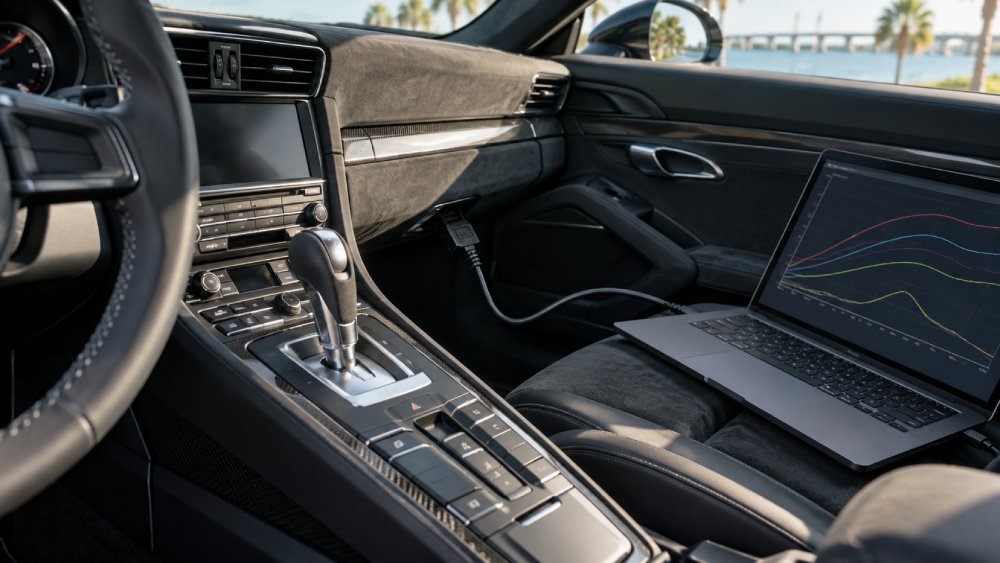
Porsche PDK tuning reprograms the transmission control unit (TCU) that runs Porsche’s dual-clutch gearbox, changing shift speed, shift points, clutch engagement and the torque limits the transmission allows. The lag owners notice after an engine tune usually comes from factory TCU settings written for stock power, not from a problem with the gearbox itself.
Here’s what a PDK tune changes and how to make sure the transmission is ready for it.
What PDK Tuning Changes
PDK stands for Porsche Doppelkupplung, Porsche’s dual-clutch transmission. Its computer decides when to shift, how quickly the clutches swap, and how much torque the gearbox will accept. A TCU tune can adjust:
- Shift speed and firmness, especially in Sport and Sport Plus
- Shift points, so the car holds gears where a tuned engine makes its power
- Downshift behavior when you brake or press the pedal hard
- Torque limits, so the transmission doesn’t pull power back from a tuned engine
Exactly what changes depends on the calibration and the model.
Why Engine Tunes and PDK Tunes Go Together
An engine tune raises torque. If the transmission’s factory limits stay put, the TCU can trim that torque or shift in ways that blunt the gain. That’s why many shops pair ECU tuning with a matching TCU tune. If you’re new to the engine side, start with what is ECU tuning. If you’re running a stage 1 tune, a mild calibration may stay within stock limits on some models, while bigger gains usually benefit from transmission tuning too.
Which Porsches Use PDK
- 911: PDK on most Carrera models, with a manual offered on some trims
- Macan: PDK on every model
- Panamera: PDK on most models
- Boxster and Cayman: PDK as an option
- Cayenne: a conventional Tiptronic S automatic, not PDK, so PDK tuning doesn’t apply
Heat, Fluid and Why Gearbox Health Comes First
Dual-clutch gearboxes don’t like heat. Florida summers and stop-and-go traffic on US-41 already push transmission temperatures up, and a tuned car driven hard adds more. If your car has ever shown a warning for Porsche transmission overheating, find the cause before any tune. Before tuning, make sure:
- The transmission fluid has been serviced on schedule
- Transmission cooling is working properly, with no leaks
- There are no stored transmission faults. A full Porsche diagnostic scan reads TCU fault history that a generic scanner can miss.
- The clutches are healthy. A proper Porsche scan can also show transmission adaptation and wear data.
Buying a Used Porsche to Tune?
Check the gearbox before you buy, not after. A Porsche pre purchase inspection should include the PDK service history, a scan of the transmission module and a road test that covers cold and warm shifts. Then choose a tuner with the experience of a true Porsche specialist, someone who can repair the transmission as well as tune it.
FAQs
Do I need a PDK tune if I only tune the engine?
Not always. A mild Stage 1 engine tune may stay within factory transmission limits on some models. As torque goes up, a matching TCU tune usually makes the car smoother and stronger.
Is PDK tuning safe for the clutches?
On a healthy gearbox with reasonable settings, yes. Very aggressive shift settings, repeated hard launches and heat are what speed up wear.
Can a PDK tune be reversed?
In most cases, yes. The factory transmission software is typically saved and can be restored later.
Conclusion
Porsche PDK tuning is often the missing half of a tuned Porsche, letting the transmission keep up with the engine instead of holding it back. Start with a healthy, well-serviced gearbox, keep an eye on heat in Florida summers, and work with a tuner who knows Porsche transmissions. If you’re in Bradenton or Sarasota and want to know what your car needs, share your year and model to get a performance tuning quote.